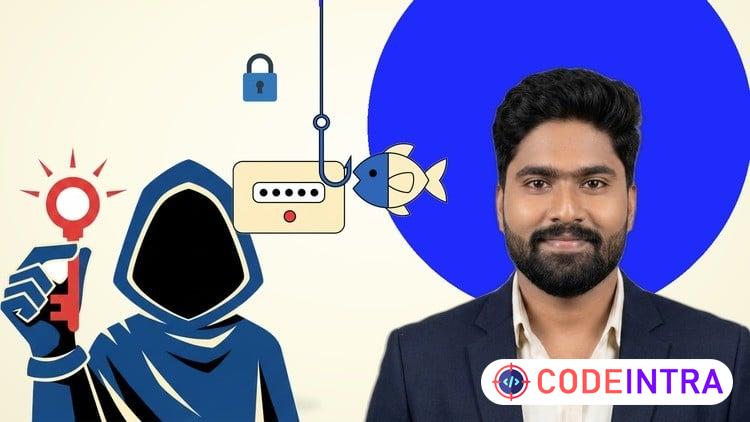
 COURSE PREVIEW
About this course
This course contains the use of artificial intelligence. The animated visuals and voice narration are AI-generated; every lesson is scripted, fact-checked and quality-reviewed by the instructor.
Cyber attacks are no longer just an IT problem — they arrive in your inbox, your text messages, and your phone calls. This course gives you a complete, beginner-friendly map of 20 major types of cyber attack, and the practical habits that stop them.
Every lesson is a short (2–7 minute) animated explainer in plain language. Each attack is taught the way a good teacher would explain it: an everyday analogy first — phishing opens with a fisherman hiding a hook inside bait — then what the attack is, how it actually works, and exactly how to protect yourself. The biggest threats (phishing, ransomware, password attacks and DDoS) each include a real-world case study: the forged-invoice con that tricked Google and Facebook out of more than $100 million, WannaCry's global outbreak, the 23andMe credential-stuffing breach, and the Mirai botnet that knocked Twitter, Netflix and Reddit offline for a morning.
What you'll cover:
Social engineering — phishing, smishing & vishing, spear phishing, and whaling (including deepfake CEO fraud)
Malware — viruses and worms, Trojan horses, ransomware, drive-by downloads, spyware & keyloggers
Password & access attacks — password attacks, brute force, session hijacking
Network attacks — DoS/DDoS, man-in-the-middle, eavesdropping, DNS spoofing
Web-app attacks (SQL injection, XSS, CSRF), insider threats, birthday attacks and zero-day exploits
A final Defense Playbook — defense in depth, the five habits that stop most attacks, and a printable cyber-hygiene checklist
No technical background is required, and captions are provided for every lecture.
By the end, you won't just know the names of these attacks — you'll recognize them when they knock, and you'll know exactly what to do.
— Vinay Vernekar, CodeSierra Tech
What you'll learn
- Recognize all 20 major types of cyber attack - phishing, ransomware, DDoS, zero-days and more - and explain how each one works in plain English.
- Spot the red flags of scam emails, texts and calls - including spear phishing, whaling and deepfake fraud - before you click, tap or reply.
- Protect your accounts and devices with high-payoff habits: passphrases, multi-factor authentication, a password manager, updates and backups.
- Learn from real incidents - WannaCry, the Mirai botnet, 23andMe, TalkTalk and the $25M Arup deepfake - and understand exactly what went wrong.
- Explain how attackers get in: malware, Trojans, drive-by downloads, stolen sessions, brute force, DNS spoofing and man-in-the-middle attacks.
- Build your personal defense-in-depth playbook and finish with a printable cyber-hygiene checklist you can apply the same day.
Before you begin
- No technical background needed - every attack is explained in plain language with everyday analogies.
- Any computer, tablet or smartphone is enough to follow along.
- Curiosity about how online scams and attacks actually work.
Who this is for
- Everyday internet users who want to protect their money, accounts and identity online
- Complete beginners curious about cyber security - no IT background required
- Employees and business owners who want to recognize phishing, ransomware and social-engineering attacks before they cause damage
- Students and career-switchers who want a friendly first map of the cyber-attack landscape before diving into technical training
How do you feel about this course?
Share your reaction. Select one emoji to leave or update your rating.
Please wait 30 seconds to explore this course.
This course opens on an external website.
Join the conversation
Share a thought or question. No account required.
Be the first to share your thoughts.